

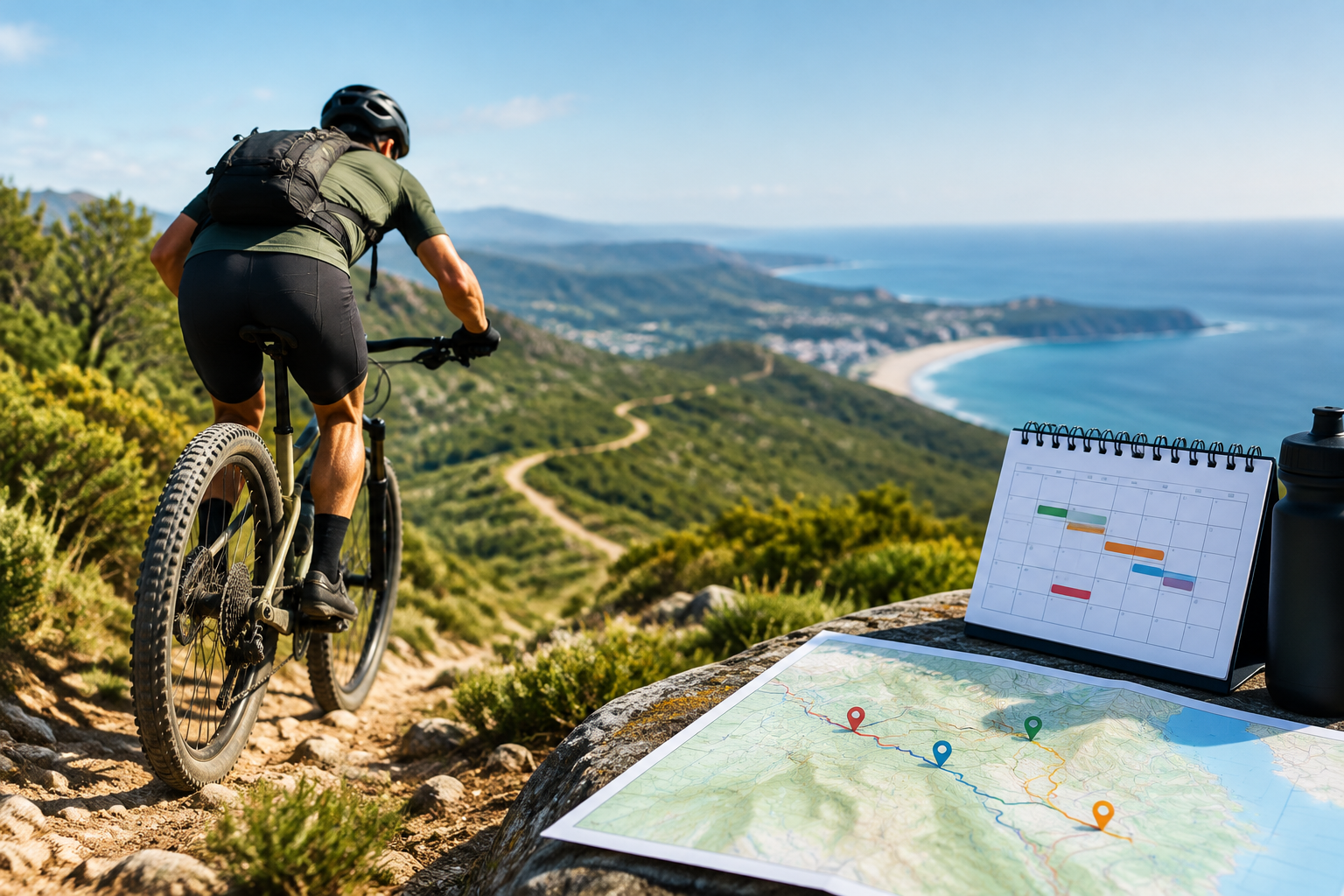
To find mountain bike races in Portugal by date, location, and distance, check a specialized calendar, select the mountain biking discipline, and apply filters for month, district, mileage, and difficulty. Then compare elevation gain, route type, price, registration deadline, and requirements in the official rules before making your choice.
How to Search the Mountain Bike Race Calendar in Portugal
A mountain bike race calendar in Portugal should let you quickly narrow an extensive list down to events compatible with your schedule and experience. On Eventsmtb, you can start with the outdoor event search and open the pages that best match what you are looking for.
Search in stages: start with the date and location, apply a distance range, and then review the elevation gain and technical difficulty. This order keeps you from wasting time on races you cannot travel to or for which you are not yet adequately prepared.
- Discipline: mountain biking, XCO, XCM, endurance, recreational ride, or another variation specified by the organizer.
- Date: specific day, weekend, or month when you are available.
- Location: parish, municipality, district, or region of Portugal.
- Distance: total mileage of each available route.
- Elevation gain: cumulative climbing announced by the organizer.
- Difficulty: physical and technical demands, when this information is available.
- Registration: availability, price, deadline, and payment platform.
The Filters That Really Help You Choose a Race
Date and Event Status
Confirm the year and exact date, especially when you find a page through a search engine. Also check whether the event is confirmed, postponed, sold out, or canceled and whether registration is still open. An old listing may remain online as an archive, but it does not necessarily refer to an upcoming edition.
District, Municipality, and Access to the Location
Searching by district gives you a broad overview; filtering by municipality brings you closer to the actual starting location. Consider travel time, parking, race number pickup, and any need for lodging. The event map can help you understand the geographic distribution of the available options.
Distance and Cumulative Elevation Gain
Distance alone does not reveal how demanding a race is. Two 40 km routes can be very different if one has fast, rolling dirt roads and the other features long climbs, loose surfaces, and technical descents. Always compare mileage, positive elevation gain, elevation profile, and time limit.
Technical Difficulty and Terrain Type
Look for information about singletrack, rocks, roots, mud, water crossings, descent gradients, and the percentage of road. If these details have not been published, check the rules or official route, or contact the organizer. Do not assume that a short distance means a simple route.
How to Compare Different Types of Mountain Bike Events
| Format | Typical Features | Best Suited For |
|---|---|---|
| Recreational mountain bike ride | Recreational pace and less focus on rankings; rules vary by organizer | Those seeking a social experience or a first event |
| Mountain bike marathon (XCM) | Long routes, timing, and the need to manage effort | Athletes with the self-sufficiency and preparation for several hours |
| Cross-country (XCO) | Lap-based course that is intense and technically demanding | Riders accustomed to changes in pace and technical riding |
| Endurance | Set duration or long distance, individually or in teams | Participants prepared for prolonged effort |
| Stage event | Several consecutive days and greater logistical complexity | Experienced athletes with planned recovery |
These descriptions are general references, not universal definitions. The format, categories, timing, and participation conditions are determined by the organizer and should be stated in each event’s rules.
How to Choose Your First Mountain Bike Race
If you are just starting out, prioritize a race close to home, with a conservative distance, clearly defined aid stations, and detailed route information. Compare the stated demands with routes you already complete comfortably, and leave room for unexpected factors such as heat, rain, mechanical problems, or more difficult terrain.
- Choose a format consistent with your experience: recreational ride or competition.
- Review distance, elevation gain, and technical difficulty together.
- Confirm time limits and checkpoints.
- Check whether there are alternative routes or shorter distances.
- Read the rules that apply to your category and bicycle type.
- Do not use essential equipment for the first time on race day.
There is no ideal mileage for everyone. Your choice should take your experience, physical condition, health, technical ability, and self-sufficiency into account. General content does not replace an assessment by health, training, or safety professionals when one is needed.
What to Check on the Event Page and in the Rules
Before starting registration, confirm that the information on the event page corresponds to the current edition and check the official source. Pay special attention to details that affect your participation, and avoid making decisions based only on old social media posts.
- Date, time, and exact start and finish locations.
- Distances, elevation gain, and a route file or map.
- Price, payment phases, and included services.
- Registration deadline, participant limit, and refund policy.
- Categories, minimum ages, licenses, and required documents.
- Mandatory equipment and rules for electric bicycles.
- Aid stations, mechanical support, and cutoff points.
- Insurance, organizer contact details, and emergency procedures.
- Recent changes, postponements, or cancellation.
Also perform a practical check of your bicycle, helmet, and required equipment. This race safety guide brings together useful points to review before the start, without replacing the rules or the organizer’s instructions.
Preparing for Mountain Bike Marathons in Portugal
After choosing the event, use the announced route to guide your preparation: likely duration, climbs, terrain, and weather conditions. An overly aggressive effort strategy at the start can compromise the second half, so consult this cycling pacing guide and adapt the principles to your experience and the recommendations of a qualified professional.
Bicycle and Equipment
Check the brakes, drivetrain, tires, suspension, and fasteners well in advance. Choose tires suited to the surface and test pressures during training instead of improvising on the day. Confirm whether the organizer requires an approved helmet, lights, an emergency blanket, a cell phone, a container for liquids, or other equipment.
Self-Sufficiency and Fueling
Estimate the time between aid stations and carry enough water and food for that interval, allowing a reasonable margin. Test what you plan to consume beforehand and seek individualized advice if you have specific clinical, nutritional, or performance needs.
Pre-Start Logistics
Plan your travel, parking, and race number pickup. Confirm when the race office opens and arrive with enough time to assemble the bicycle, check your equipment, and get into position without rushing. If there are weather-related or route changes, follow the organizer’s communications.
The Role of Eventsmtb and the Role of the Organizer
Eventsmtb aggregates, organizes, and verifies published information to make it easier to discover mountain bike events. The event page may direct you to registration processed on the platform itself or to an external website; always confirm where your data will be collected and payment completed.
The organizer is responsible for organizing the race, the rules, the route, the schedule, and operational decisions, including changes or cancellations. Although Eventsmtb seeks to keep the information up to date, you should confirm the price, available spots, mandatory equipment, and final conditions through the organizer’s official channels.
Find the Next Race and Decide With Confidence
Start with the combination that matters most to you—date, region, or distance—and gradually narrow the results. Save two or three options, compare the factual event details for each one, and only then proceed with registration. This way, the mountain bike race calendar in Portugal becomes a decision-making tool, not just a list of dates.
If you are an organizer, publishing complete and up-to-date information helps athletes find the race and understand whether it is suitable for them. Include location, routes, elevation gains, prices, deadlines, contact details, rules, and any relevant changes, always distinguishing confirmed details from information that is still provisional.
Frequently asked questions
How can I find mountain bike races in Portugal by date, location, and distance?
Check the Eventsmtb calendar and apply the available filters for discipline, date, region or district, and distance. Then open each event page to confirm elevation gain, difficulty, schedules, price, and registration status.
What distance should I choose for my first mountain bike race?
Choose a distance you can complete with room to spare, taking elevation gain, terrain type, technical difficulty, and estimated time into account. A short race is not necessarily easy if it has a lot of climbing or demanding trails.
What is the difference between a mountain bike marathon and a recreational mountain bike ride?
A mountain bike marathon tends to include rankings, timing, and competitive rules, while a recreational ride prioritizes noncompetitive participation. Terminology can vary, so always check the official rules.
Where can I confirm the price and registration deadline?
Check the event page and the organizer’s rules. Confirm the last updated date, pricing tiers, what is included, and the platform where registration is completed.
Does Eventsmtb organize the races listed on the calendar?
Eventsmtb aggregates, verifies, and publishes event information, but organization and operational decisions usually belong to the respective organizer. Changes, cancellations, rules, and participation conditions should be confirmed with the organizer.
What equipment should I bring to a mountain bike race?
An approved helmet is essential, and the organizer may specify other mandatory equipment. Also bring equipment suited to the expected duration and conditions, but always check the rules and follow professional guidance when necessary.